


Bitcoin Cloud Mining
4.288.00 Reviews
App Specs
- Version
- 2.7
- Updated On
- License
- Free
- Downloads
- 10,000+
- Developer
- Music Tools Pro
- Categories
- Finance
- Platform
- Android
Screenshots
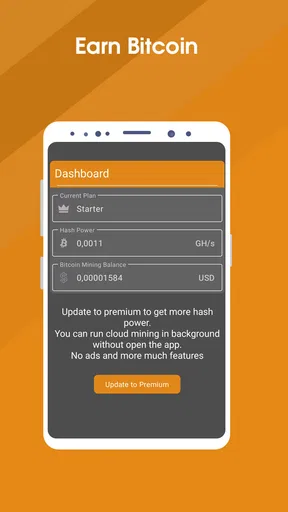
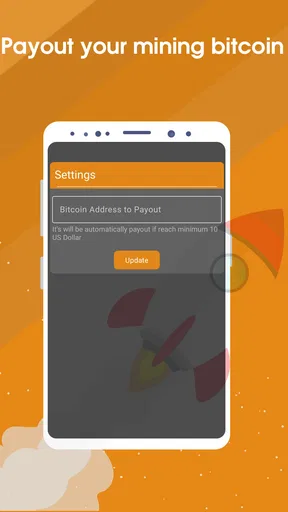
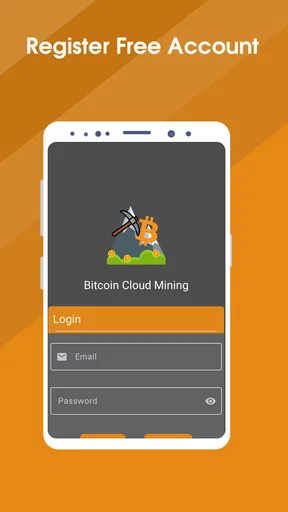
 Analysis by AppCompare
Bitcoin Cloud Mining is a finance app from Music Tools Pro that presents itself as a way to explore bitcoin cloud mining from a mobile device. I approached it less like a promise of effortless income and more like a financial tool that deserves careful checking before any money or personal information is involved. That distinction matters because the app is free to install, yet it also offers in-app purchases ranging from $4.99 to $35.99 per item.
My first impression is that the app is aimed at people curious about earning bitcoin without buying or maintaining physical mining equipment. That can sound convenient, especially if you are using an older Android phone and want to understand the basic idea of cloud mining. Still, convenience should not be confused with a guaranteed return. In this category, the important questions are how clearly the app explains its process, what control the user has, and whether the financial choices are easy to understand before spending anything.
What the app is really offering
The application belongs to the finance category rather than entertainment, so I would treat every screen involving balances, mining progress, upgrades, withdrawals or purchases as a financial decision point. The store summary describes bitcoin mining through a digital cloud setup, but that short explanation does not by itself tell me how the underlying service works. A careful user should therefore inspect the in-app wording instead of assuming that a progress display represents guaranteed bitcoin earnings.
In practical terms, the appeal is straightforward: you can investigate the concept of remote mining without purchasing a mining rig, finding a suitable location, or dealing with hardware noise and heat. That makes it potentially useful for a beginner who wants a low-cost way to learn the vocabulary and workflow around cloud mining. It is less suitable for someone who expects a predictable investment product or wants the same transparency as a regulated savings or brokerage service.
The app is free to download and is marked for Everyone, which lowers the barrier to trying it. However, the presence of optional purchases changes how I would use it. I would begin by exploring the free experience, reading every purchase description, and avoiding payment until I understood what each item changes. A free entry point is helpful, but it should not be read as evidence that the paid route will be profitable.
Trust starts with what is visible
Bitcoin mining applications need a higher level of caution than ordinary utility apps because the user may connect financial expectations to an animated balance or a mining rate. I would look for plain explanations of the mining model, the conditions attached to any reward, and the steps required before a withdrawal. If those details are difficult to find, that is a usability problem even before it becomes a financial concern.
The developer shown for the app is Music Tools Pro, a name that does not immediately explain a connection with cryptocurrency or finance. I cannot treat that name alone as proof of anything negative, but it does make me more interested in the app’s visible support channels, account settings and transaction explanations. When an app crosses from music-related branding into bitcoin activity, clarity becomes especially important for a first-time user.
Worth Reading Before You Choose

EA SPORTS FC Mobile 26 Is a Bigger Football Game, but It Takes Time

Flipboard Shows What News Apps Must Do Beyond the Feed

Switching to Android Auto Means Rethinking Your Driving Routine

Google Calendar Makes a Crowded Week Easier to Manage

Ludo King Makes the Most of the Minutes Between Plans

Baby Panda World Brings Quick Play to Modern Phones, but Its Game Library Feels Busy
The current version is 2.7, and the app was released on November 17, 2023. Those details help identify the product, but they do not replace a personal review of the current screens. I would still check the version shown on my device, read the latest change notes if available, and pay attention to whether the interface explains changes to mining rules or purchase options in a way an ordinary user can follow.
How I would test it without rushing
My preferred first session would be deliberately boring. I would install the app, inspect the opening screens, note whether an account is requested immediately, and find the areas that explain mining, balances and withdrawals. I would not enter payment details during that first pass. This approach gives me time to distinguish educational information from a sales prompt.
I would also take screenshots or written notes of the purchase descriptions before making any decision. This is useful because cloud-mining offers can be difficult to compare when the interface emphasizes a large number or a fast-looking progress bar. The meaningful details are the conditions behind that number: duration, fees, minimum withdrawal requirements, and whether the displayed amount is an estimate or an actual available balance.
Another practical test is to close the app and return later. I would check whether the same balance, mining status and account information remain understandable after reopening it. If a user must repeatedly watch promotional screens or hunt for the same controls, that friction matters. A finance app should make it easy to verify what happened, not merely easy to start an activity.
Account control matters more than attractive progress
Before using any account-based feature, I would look for a clear way to sign out, change credentials, remove stored information and contact support. I would also check whether the app lets me stop an activity without forcing me into a purchase or leaving a confusing status behind. These are small controls, but they determine how much agency the user has when plans change.
I would be particularly careful with wallet-related information. A private key, recovery phrase or withdrawal address should never be pasted into an unfamiliar field simply because the app asks for it. If the app presents a wallet connection or payout form, I would verify every character of the destination address and avoid sending funds until I understood whether the action was reversible. A wrong blockchain address is not the kind of mistake that a friendly interface can automatically repair.
The safest workflow is to separate exploration from commitment. I would first learn how the app labels a balance, then determine whether a withdrawal is available under the displayed conditions, and only after that consider whether the service fits my needs. If the app makes the purchase step much clearer than the withdrawal step, I would regard that imbalance as a reason to stop and investigate further.
Privacy-sensitive moments deserve attention
There are several points where I would slow down: account creation, identity prompts, payment setup, wallet entry and support requests. At each stage, I would read the exact request and provide only what is necessary. I would not upload identity documents or share sensitive financial details merely to unlock a screen unless I understood why the information was needed and how the app presented its privacy choices.
I would also review the permissions requested by the Android installation and compare them with the app’s purpose. A bitcoin cloud-mining tool should have a clear reason for every sensitive permission it requests. If a permission appears unrelated to viewing mining information, managing an account or completing a user-initiated action, I would decline it where possible and reconsider using the app if that prevents normal operation.
On a shared phone, I would avoid leaving the account open and would not allow payment information to remain saved unless I had a strong reason to do so. This is a simple habit, but it protects against accidental purchases and casual access to balances. I would also avoid using the app on public Wi-Fi for account changes or payment activity, especially if the interface does not make security status easy to understand.
Notifications are another small but important choice. If the app offers alerts about mining activity or promotions, I would keep only the notices I genuinely need. Frequent promotional prompts can make it harder to distinguish an operational message from an invitation to spend. Turning off unnecessary notifications gives the user more control over when the app enters their attention.
A realistic everyday use case
Imagine someone who hears about cloud mining during a commute and wants to test the idea on an older phone. I think this app could serve as a starting point for that person if they treat the first week as research rather than income generation. They could review the interface, learn how the app describes mining progress, record any conditions attached to a payout, and compare those details with other explanations of bitcoin mining.
The same person should not use a rent payment, emergency fund or borrowed money to buy a mining package. The free installation makes experimentation possible, but the paid items create a clear point where curiosity can become financial exposure. I would set a personal spending limit of zero until I had independently understood the terms, and even then I would consider any payment entertainment or education spending rather than an investment with a promised outcome.
This workflow also answers an important practical question: do you need to keep the app open constantly? I would not assume that. The phrase cloud mining suggests that processing may be handled remotely, but the app’s own explanations should determine how activity is counted. If the interface does not clearly explain whether mining continues while the app is closed, I would avoid making decisions based on an assumed background process.
Where it differs from usual alternatives
The most familiar alternatives are buying bitcoin through an exchange, holding it in a wallet, learning with a mining simulator, or operating physical mining hardware. Each option solves a different problem. An exchange is generally more direct for buying an asset, a wallet is focused on custody, a simulator is better for learning concepts without financial exposure, and hardware mining gives more direct control but requires equipment, electricity and technical maintenance.
Bitcoin Cloud Mining sits in the middle of those choices. It is more action-oriented than a purely educational simulator, but less tangible than owning and operating mining equipment. It may be easier for a beginner than configuring hardware, yet that ease can hide the important question of what the user actually controls. If your priority is learning safely, a simulator or public educational resource may be a better first step. If your priority is holding bitcoin, a clearly explained wallet or exchange may be more direct.
I would choose this app only when its specific workflow is clear enough for my purpose. I would skip it if I wanted audited financial reporting, a familiar custody model, detailed mining economics or a straightforward buy-and-hold experience. The app’s category and summary explain its general direction, but they do not make it interchangeable with a bank account, investment platform or personal mining operation.
Useful habits for managing the paid side
The in-app purchase range is wide enough that I would never tap a purchase button casually. I would read the item name, check whether the payment is one-time or recurring, and confirm what happens after the purchase ends. I would also look for a receipt and verify that the transaction appears in the platform’s purchase history. If the benefit is described with vague language such as increased speed or enhanced power, I would want a concrete explanation before paying.
A second useful habit is to keep a simple record of dates, amounts and displayed balances. This is not about trying to prove profitability from a short test; it is about making the experience auditable for yourself. If the app shows a changing balance, a written record can reveal whether the number is actually available for withdrawal, merely estimated, or dependent on another condition.
A third is to test the smallest possible action before committing to a larger one. If the app offers a legitimate, clearly explained way to verify an account or request a payout without extra spending, I would use that as a learning step. I would never increase spending simply because a timer, progress meter or promotional message suggests that waiting will improve the result.
What the audience response tells me
The app has an average rating of 4.2 from around 2.8 thousand ratings, with 88 written reviews and over 10 thousand installs. That gives the product a visible user base and suggests that many people have tried it, but it does not answer the questions that matter most for a financial tool. Ratings can reflect interface convenience, expectations, technical performance or enthusiasm about the concept rather than a verified financial outcome.
I would read the written reviews for recurring details instead of relying on the average alone. In particular, I would look for comments about account access, purchase clarity, payout steps, support responsiveness and whether the app behaves consistently after an update. I would treat both praise and complaints as leads for my own testing, not as proof that every user will have the same experience.
Who should try it and who should pass
I think the best fit is a cautious beginner who wants to inspect a cloud-mining interface and is comfortable treating the experience as an experiment. Someone who enjoys comparing financial tools, documenting conditions and checking account controls may get more value from it than a user who simply wants a button that produces bitcoin.
I would advise a pass for anyone looking for guaranteed earnings, immediate liquidity or a regulated savings alternative. I would also avoid it if the app requests information I am not comfortable sharing, if the withdrawal rules are hard to locate, or if the purchase screen is easier to understand than the account and payout controls. Those are not minor inconveniences when money and personal data are involved.
The Everyone rating makes the app broadly accessible, but accessibility is not the same as financial suitability. Younger or inexperienced users should involve a trusted adult before making any purchase, and every user should remember that a simple interface can still represent a complicated financial arrangement.
My cautious verdict
After looking at it as a finance app rather than a quick-earning shortcut, I see Bitcoin Cloud Mining as a product to approach slowly. Its free entry, mobile format and cloud-mining focus make it approachable for exploration, while the paid items mean that users need to keep firm control over spending. The app may be interesting for learning how one service presents remote mining, but I would not treat a displayed balance as proof of profit.
My recommendation is to install it only if you are prepared to verify each step yourself. Start without paying, inspect permissions and privacy choices, locate account and withdrawal controls, and read purchase terms in full. Keep wallet and identity information protected, record what the app displays, and stop if the financial path becomes less clear than the promotional path.
The most important takeaway is simple: use it as a cautious research tool, not as a promise of income. For me, that makes the app worth considering for curious beginners who value experimentation, but not the right choice for someone seeking certainty, professional-grade financial controls or a direct route to owning bitcoin.
Pros
- Simple way to learn how cloud mining contracts work
- No specialized mining hardware or technical setup required
- Accessible from mobile devices for on-the-go monitoring
- May offer multiple contract options for different budgets
- Useful dashboard for tracking mining activity and earnings
Cons
- Returns can be reduced significantly by maintenance and service fees
- Mining contracts may have fixed terms with limited flexibility
- Profitability depends heavily on Bitcoin price and network difficulty
- Cloud mining providers require trust with deposited funds
- Some features or contract details may be unclear to beginners
FAQs for Bitcoin Cloud Mining
What is Bitcoin Cloud Mining, and how does it work?
Bitcoin Cloud Mining allows users to participate in cryptocurrency mining without purchasing or maintaining physical mining hardware. Instead, you typically rent a portion of computing power from a remote mining facility through the app. The service uses that power to mine Bitcoin and displays estimated earnings, contract details, mining progress, and payout information within your account.
Is Bitcoin Cloud Mining free to use, or do I need to pay?
Some Bitcoin Cloud Mining apps advertise free mining features, but these may come with limitations, advertisements, waiting periods, or very small earning rates. Other services require users to purchase a mining contract or upgrade their account before receiving meaningful rewards. Always review the pricing, maintenance fees, withdrawal conditions, and refund policy before depositing money.
Can I really make money with Bitcoin Cloud Mining?
Potential earnings depend on the Bitcoin price, network difficulty, contract duration, mining fees, and the amount of computing power assigned to your account. In practice, profits are not guaranteed, and free plans often generate only minimal rewards. Treat projected returns as estimates rather than promises, and never invest money you cannot afford to lose.
How do withdrawals work in Bitcoin Cloud Mining?
Withdrawal rules vary between providers and may include minimum balance requirements, identity verification, network fees, processing delays, or restrictions based on the selected contract. Before using the app, check whether withdrawals are available in your country and which Bitcoin wallet formats are supported. Be especially cautious if the service asks for additional deposits to unlock your funds.
Is Bitcoin Cloud Mining safe and legitimate?
Safety depends entirely on the provider behind the application. Cloud mining has attracted fraudulent services that promise guaranteed profits, display unrealistic mining results, or prevent users from withdrawing their earnings. Before downloading, investigate the company, read independent reviews, check app permissions, and avoid sharing unnecessary personal information. Use strong account security and never send funds solely because of pressure or guaranteed-return claims.


